
Written & Researched by: Iqra Fatima Khan
Designation: Health Content Writer & Researcher
Published: October 8, 2026
Last Updated: October 8, 2026
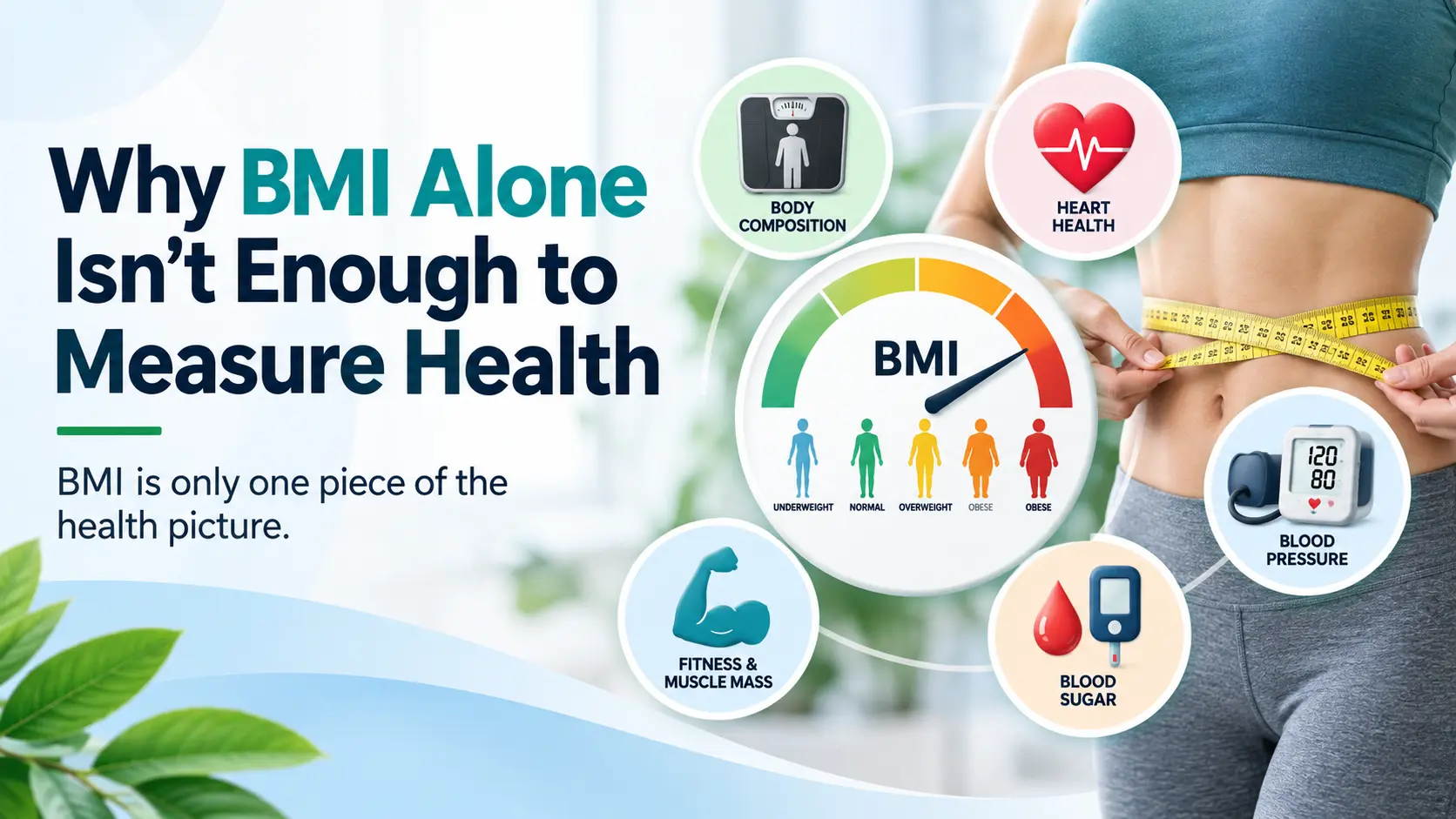
Body mass index (BMI) is one of the most widely used tools for assessing weight-related health risks. It’s quick, inexpensive, and easy to calculate. But BMI alone isn’t enough to measure your overall health, and relying on a single number can sometimes give you an incomplete or misleading picture.
You might have a BMI in the healthy-weight range while living with high blood pressure, elevated cholesterol, or excess abdominal fat. On the other hand, someone with a BMI in the overweight range might have substantial muscle mass and favorable metabolic health markers.
That’s why I believe BMI is most useful when we treat it as a starting point for understanding health, rather than a final judgment about someone’s body.
In this guide, I’ll explain what BMI can and cannot tell us, why body composition matters, and which additional measurements can help us develop a more complete picture of health.
What Is BMI, and What Does It Actually Measure?
Body mass index is a calculation that compares your weight with your height.
Healthcare professionals commonly use BMI as a screening tool to identify weight categories that may be associated with certain health risks.
The standard formula is:
BMI = Weight (kg) ÷ Height (m)²
For example, if you weigh 75 kilograms and are 1.75 meters tall:
BMI = 75 ÷ (1.75 × 1.75) = 24.5
According to standard adult BMI categories, this falls within the healthy-weight range.
For adults aged 20 and older, the commonly used categories are:
| BMI | Weight Category |
|---|---|
| Below 18.5 | Underweight |
| 18.5–24.9 | Healthy weight |
| 25.0–29.9 | Overweight |
| 30.0 or higher | Obesity |
These categories are useful for population-level research and initial health screening. However, they don’t directly measure body fat, muscle mass, cardiovascular fitness, or metabolic health.
If you’d like to calculate your own BMI, you can use our free BMI Calculator.
The important distinction: BMI estimates weight relative to height. It doesn’t directly measure how healthy you are.
7 Reasons Why BMI Alone Isn’t Enough to Measure Health
1. BMI Cannot Distinguish Between Muscle and Fat
One of BMI’s biggest limitations is that it treats all body weight the same.
Muscle, fat, bones, organs, and body fluids all contribute to your weight. Yet BMI cannot distinguish between these components.
Consider two adults who are both 5 feet 10 inches tall and weigh 190 pounds.
Both have a BMI of approximately 27.3, placing them in the overweight category.
However, their body compositions could be very different.

One person might be a strength-training athlete with relatively high muscle mass and low body fat. The other might have less muscle and more abdominal fat.
Although their BMI scores are identical, their health profiles and risk factors may differ significantly.
This is especially important for athletes, bodybuilders, and people who regularly participate in resistance training.
What I recommend: If you have substantial muscle mass, interpret your BMI alongside waist measurements, body composition, and other relevant health indicators.
2. BMI Doesn’t Show Where Body Fat Is Stored
Not all body fat has the same relationship with health risks.
Fat stored around the hips and thighs is different from fat accumulated deep within the abdominal cavity, known as visceral fat.
Visceral fat surrounds internal organs and is associated with increased risks of several metabolic and cardiovascular conditions.
These include:
- Type 2 diabetes
- High blood pressure
- Cardiovascular disease
- Abnormal blood cholesterol levels
- Metabolic dysfunction
Two people with the same BMI may carry fat in very different places.

Someone with a BMI of 23 could have a relatively high amount of abdominal fat, while someone with a BMI of 27 might carry less fat around their waist.
BMI cannot identify these differences.
That’s why waist circumference and waist-to-height ratio can provide useful additional information.
3. BMI Doesn’t Directly Measure Metabolic Health
Metabolic health involves how effectively your body regulates blood sugar, blood pressure, and blood lipids, among other processes.
BMI doesn’t measure any of these functions.
A person with a BMI in the healthy-weight range can still have:
- Elevated blood glucose
- Insulin resistance
- High LDL cholesterol
- High blood pressure
- Elevated triglycerides
Conversely, some people with higher BMI values may have favorable metabolic measurements at a particular point in time.

However, favorable test results don’t necessarily eliminate the long-term health risks associated with excess adiposity.
I think this is one of the most important reasons not to interpret BMI in isolation.
A healthy BMI does not guarantee healthy blood pressure, cholesterol, or blood sugar levels.
4. BMI May Be Less Informative for Older Adults
Our body composition naturally changes as we age.
Many adults experience a gradual decline in muscle mass, particularly if they don’t participate in regular strength-building activities.
At the same time, body fat may increase or become redistributed toward the abdominal area.
As a result, an older adult could maintain approximately the same body weight and BMI while losing muscle and gaining fat.
BMI alone might not reveal these changes.

For older adults, I would pay particular attention to additional factors such as muscle strength, physical function, nutritional status, and changes in waist size.
Unintentional weight loss can also be an important warning sign, even when BMI appears normal.
5. BMI Doesn’t Account for All Population Differences
BMI is calculated using the same basic formula for adults, but its relationship with body fat and health risk can vary across populations.
Research shows that people from different ethnic backgrounds may have different body fat percentages and metabolic risks at similar BMI values.
For example, some Asian populations may experience elevated risks of type 2 diabetes and cardiovascular disease at BMI levels below the standard obesity threshold of 30.
This is why certain clinical guidelines use lower BMI thresholds to prompt further risk assessment in specific populations.
However, these differences should not be interpreted as meaning that every person within an ethnic group has the same body composition or health risks.
BMI remains useful, but individual clinical context matters.
6. BMI Doesn’t Measure Fitness or Everyday Health Behaviors
BMI cannot tell me whether someone:
- Exercises regularly
- Has good cardiovascular endurance
- Gets adequate sleep
- Eats a balanced diet
- Smokes or uses tobacco
- Has a sedentary lifestyle
- Experiences chronic stress
These behaviors and characteristics can influence long-term health independently of BMI.
For example, two people with identical BMI scores might have very different levels of physical activity and cardiovascular fitness.
One might walk daily, exercise regularly, and maintain favorable blood pressure. The other might spend most of the day sitting and have poorly controlled hypertension.
Their BMI values wouldn’t reveal these differences.
Physical activity, nutrition, sleep, and other lifestyle factors deserve attention regardless of weight category.
7. BMI Is Not Suitable for Every Life Stage
Standard adult BMI categories are not appropriate for everyone.
Children and teenagers: BMI must be interpreted using age- and sex-specific growth charts rather than standard adult categories.
Pregnant individuals: Pregnancy-related changes in weight make ordinary adult BMI interpretation inappropriate for assessing current pregnancy weight status. Prepregnancy BMI may be used in prenatal care to guide recommended weight gain.
People with significant fluid retention: Conditions that cause edema or abnormal fluid accumulation can affect body weight without reflecting changes in body fat.
People with certain medical conditions or disabilities: Body composition and the relationship between BMI and health risk may differ, requiring individualized assessment.
For these groups, healthcare professionals may use additional or alternative assessment methods.
BMI vs. Body Fat Percentage: What’s the Difference?
BMI and body fat percentage are often discussed together, but they measure different things.
BMI uses your height and weight to produce a numerical value.
Body fat percentage estimates how much of your total body weight consists of fat.
For example, if you weigh 180 pounds and have an estimated body fat percentage of 25%, approximately 45 pounds of your body weight would consist of fat.
BMI cannot provide this information.
| Feature | BMI | Body Fat Percentage |
|---|---|---|
| Uses height and weight | Yes | Depends on method |
| Estimates proportion of body fat | No | Yes |
| Distinguishes fat from lean mass | No | Approximately |
| Identifies fat distribution | No | Usually not |
| Easy to calculate at home | Yes | Depends on equipment |
| Useful for health screening | Yes | Can add context |
| Diagnoses overall health | No | No |
Body fat percentage can be estimated through methods such as bioelectrical impedance analysis (BIA), skinfold measurements, and dual-energy X-ray absorptiometry (DXA).
Each method has limitations. For example, hydration can influence some BIA readings, while DXA requires specialized equipment.
I wouldn’t recommend treating any single body fat percentage reading as a complete measure of health either.
The most useful assessment combines appropriate measurements with medical history and clinical findings.
What Should You Measure Besides BMI?
If BMI alone isn’t enough, what else should you look at?
I recommend thinking about health in several dimensions rather than searching for one perfect number.
1. Waist Circumference
Waist circumference helps assess abdominal size and may provide additional information about weight-related health risks.
For many nonpregnant U.S. adults, commonly used waist circumference risk thresholds are:
- Men: Greater than 40 inches (102 cm)
- Women: Greater than 35 inches (88 cm)

These are general screening thresholds, not universal cutoffs. Risk may increase at smaller waist measurements in some populations.
Waist circumference is particularly helpful because BMI doesn’t reveal where fat is stored.
2. Waist-to-Height Ratio
Waist-to-height ratio compares your waist circumference with your height.
The formula is:
Waist-to-Height Ratio = Waist Circumference ÷ Height
Both measurements must use the same units.
For example, if your waist is 32 inches and your height is 68 inches:
32 ÷ 68 = 0.47
A waist-to-height ratio below 0.5 is often used as a practical general target for adults, although interpretation depends on age, population, and clinical circumstances.
The simple public-health message is to try to keep your waist circumference below half your height.
I find this measurement particularly useful because it considers abdominal size in relation to a person’s height.
Still, it is a screening measure, not a diagnosis.
3. Blood Pressure
Blood pressure is an important indicator of cardiovascular health.
High blood pressure often causes no noticeable symptoms, which is why regular measurement matters.
For most adults, normal blood pressure is generally defined as:
Below 120/80 mm Hg
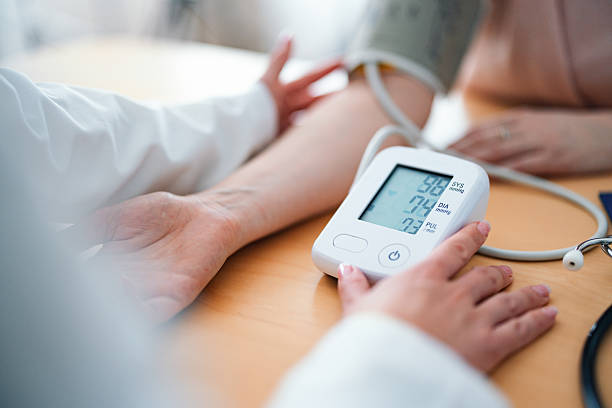
Blood pressure classification and treatment decisions depend on the actual readings and individual circumstances.
A healthy BMI doesn’t rule out hypertension.
4. Blood Glucose and A1C
Blood glucose tests help evaluate how your body regulates sugar.
An A1C test reflects average blood glucose levels over approximately the previous two to three months.
For many nonpregnant adults, common A1C categories are:
| A1C Result | Interpretation |
|---|---|
| Below 5.7% | Normal range |
| 5.7%–6.4% | Prediabetes range |
| 6.5% or higher | Diabetes range |
A diabetes diagnosis generally requires confirmation unless there is clear clinical evidence of hyperglycemia. A1C also has limitations in certain medical circumstances.
Your healthcare professional can determine which tests are appropriate based on your risk factors and medical history.
5. Cholesterol and Triglycerides
A lipid panel can provide information about:
- LDL cholesterol
- HDL cholesterol
- Total cholesterol
- Triglycerides
These measurements help assess cardiovascular risk.
Your ideal levels and whether you need treatment depend on factors such as age, medical history, existing cardiovascular disease, and overall risk.
BMI cannot replace a lipid panel.
6. Physical Fitness and Muscle Strength
Fitness and muscle strength provide information that height and weight alone cannot.
Useful indicators may include walking endurance, strength, balance, mobility, and your ability to perform everyday activities.
For most adults, the U.S. Physical Activity Guidelines recommend at least 150 minutes of moderate-intensity aerobic activity per week, along with muscle-strengthening activities on at least two days.
These activities can support health even when the number on the scale doesn’t change significantly.
A Practical Example: Two People With the Same BMI
Imagine two fictional adults, Alex and Jordan.
Both are 35 years old, 5 feet 9 inches tall, and weigh 175 pounds.
Their BMI is approximately 25.8.
However, their other health measurements differ.
| Health Indicator | Alex | Jordan |
|---|---|---|
| BMI | 25.8 | 25.8 |
| Waist circumference | 33 inches | 40 inches |
| Blood pressure | 116/74 mm Hg | 142/92 mm Hg |
| A1C | 5.2% | 6.1% |
| Physical activity | Regular exercise | Mostly sedentary |
| LDL cholesterol | Within personal target | Elevated |
These are fictional examples for educational purposes, not clinical diagnoses.
Although Alex and Jordan have the same BMI, Jordan has several measurements that warrant medical attention.
Jordan’s blood pressure is elevated into the stage 2 hypertension range, and the A1C is in the prediabetes range.
Alex’s measurements appear more favorable, although no short list of numbers can guarantee good health.
The point is straightforward: BMI is only one part of a much larger health picture.
Is BMI Still Useful?
Yes. Despite its limitations, BMI still has an important role in healthcare and public-health research.
I wouldn’t recommend ignoring it entirely.
BMI is valuable because it’s:
- Quick to calculate
- Inexpensive
- Noninvasive
- Easy to use in large population studies
- Helpful for identifying people who may benefit from additional assessment
At the population level, higher BMI categories are associated with increased risks of several chronic conditions.
BMI can also help healthcare professionals monitor weight-related changes over time.
However, the relationship between BMI and health is not identical for every individual.
The Centers for Disease Control and Prevention (CDC) describes BMI as a screening measure that should be considered alongside other factors when evaluating health.
That’s the approach I support: use BMI to begin a conversation, not end one.
How to Use BMI as Part of a More Complete Health Assessment
If you want to understand your health beyond your weight, here’s a practical approach.
Step 1: Calculate your BMI.
Start with your height and weight using our free BMI Calculator.
Treat the result as an initial screening number rather than a health score.
Step 2: Measure your waist.
Use a flexible measuring tape and follow a consistent measurement technique.
Your waist measurement can help provide information about abdominal fat-related risk.
Step 3: Review your health measurements.
Discuss blood pressure, cholesterol, and blood glucose screening with a healthcare professional.
The appropriate tests and screening frequency depend on your age, history, and risk factors.
Step 4: Evaluate your everyday habits.
Consider your physical activity, nutrition, sleep, smoking status, and other behaviors that influence health.
Avoid assuming that a lower BMI automatically means a healthier lifestyle.
Step 5: Pay attention to strength and physical function.
Think about your endurance, mobility, and ability to perform everyday activities.
These can provide useful context, especially as you age.
Step 6: Look at trends instead of one-time results.
Changes in waist circumference, blood pressure, physical fitness, and laboratory measurements may provide a more informative picture over time.
Step 7: Seek individualized guidance when needed.
If your BMI or other measurements raise concerns, speak with a qualified healthcare professional before making major changes to your diet, exercise routine, or medications.
Common Mistakes People Make When Interpreting BMI
In my view, one of the biggest problems with BMI is not the formula itself but how people interpret the result.
Assuming a Normal BMI Means Perfect Health
Someone can have a healthy-range BMI and still experience high blood pressure, diabetes, cardiovascular disease, or nutritional deficiencies.
Routine preventive care remains important.
Assuming a High BMI Automatically Means Poor Health
A higher BMI may signal increased health risk, but it doesn’t describe every aspect of someone’s health.
Body composition, fat distribution, medical history, and clinical measurements matter.
Comparing BMI Scores Without Considering Context
Two individuals with the same BMI may differ substantially in age, muscle mass, fat distribution, and medical conditions.
BMI comparisons are most meaningful when interpreted within an appropriate clinical context.
Trying to Reach a Specific BMI at Any Cost
Focusing exclusively on a BMI target can encourage unrealistic expectations or unhealthy weight-control behaviors.
I prefer an approach that prioritizes sustainable habits, adequate nutrition, physical activity, and measurable improvements in health.
Frequently Asked Questions About BMI and Overall Health
1. Why isn’t BMI enough to determine if someone is healthy?
BMI only compares weight with height. It doesn’t directly measure body fat, muscle mass, abdominal fat, blood pressure, blood sugar, cholesterol, or physical fitness. These additional factors can significantly influence overall health.
2. Can you have a normal BMI and still be unhealthy?
Yes. A person with a BMI between 18.5 and 24.9 can still have high blood pressure, elevated blood glucose, abnormal cholesterol, or other health conditions. A healthy BMI does not replace regular preventive healthcare.
3. Can someone with a high BMI still be healthy?
Someone with a higher BMI may have favorable blood pressure, blood sugar, cholesterol, and fitness measurements. However, these findings do not necessarily eliminate future health risks associated with excess body fat. Individual evaluation is important.
4. Is waist-to-height ratio better than BMI?
Waist-to-height ratio can provide additional information about abdominal fat-related risk and may predict certain cardiometabolic risks better than BMI in some settings. Neither measurement is universally superior for every purpose, and both have limitations.
5. Is BMI accurate for athletes and bodybuilders?
BMI can overestimate fatness in athletes with substantial muscle mass because it cannot distinguish muscle from fat. Waist measurements, body composition, and clinical assessment can provide useful context.
6. What is a better way to measure overall health than BMI?
There is no single perfect measurement. A more complete assessment considers BMI, waist size, blood pressure, glucose, cholesterol, physical fitness, medical history, and lifestyle factors.
7. Should I stop using BMI completely?
No. BMI remains a useful screening tool. The important thing is to avoid treating it as a complete diagnosis or a definitive measure of your overall health.
8. Does BMI measure body fat percentage?
No. BMI is calculated from height and weight. Although it is associated with body fat at the population level, it does not directly measure body fat percentage.
Final Thoughts: Your Health Is More Than a BMI Number
BMI can help identify potential weight-related health risks, but it cannot tell the full story about your body.
It doesn’t reveal how much muscle you have, where you store body fat, whether your blood pressure is elevated, or how well your body regulates blood sugar.
That’s why I encourage readers to look beyond the number on the scale.
Instead of asking only, “Is my BMI normal?” consider asking:
“What do my overall health measurements, daily habits, and physical abilities tell me about my well-being?”
Start by checking your BMI with our free BMI Calculator, then use the result as one piece of information in a broader approach to health.
Remember, the goal isn’t simply to achieve a particular BMI. It’s to build habits and make informed decisions that support your long-term health.
Sources and References
The following authoritative medical and public-health resources provide further information about BMI, body composition, cardiometabolic risk, and health screening.
- Centers for Disease Control and Prevention (CDC). Body Mass Index (BMI) — BMI screening, interpretation, and limitations.
- National Heart, Lung, and Blood Institute (NHLBI). Assessing Your Weight and Health Risk — BMI, waist circumference, and associated health risks.
- National Institute of Diabetes and Digestive and Kidney Diseases (NIDDK). Health Risks of Overweight & Obesity — Weight-related conditions and metabolic health risks.
- American Heart Association (AHA). Understanding Blood Pressure Readings — Blood pressure categories and cardiovascular risk.
- Centers for Disease Control and Prevention (CDC). A1C Test for Diabetes and Prediabetes — A1C interpretation and diabetes screening.
- National Institute of Diabetes and Digestive and Kidney Diseases (NIDDK). Body Weight Planner — Evidence-based weight planning and energy-balance education.
- National Institute for Health and Care Excellence (NICE). Overweight and Obesity Management (NG246) — BMI, waist-to-height ratio, and weight-related risk assessment.
- U.S. Department of Health and Human Services. Physical Activity Guidelines for Americans — Recommended physical activity and muscle-strengthening habits.
Medical Disclaimer: This article is for educational and informational purposes only. BMI and other measurements discussed here are screening tools and cannot independently diagnose medical conditions. Individual health risks vary. Consult a qualified healthcare professional for personalized medical advice, diagnosis, or treatment.

Iqra Fatima Khan is a Health Content Writer & Researcher at BMIICalculator.com, where she creates practical, easy-to-understand content about Body Mass Index (BMI), healthy weight management, nutrition, and general wellness. Her articles are researched using reputable health resources, including guidance from organizations such as the CDC, WHO, and NIH. She focuses on presenting health information clearly while emphasizing the limitations of BMI and encouraging readers to seek professional medical advice when appropriate.